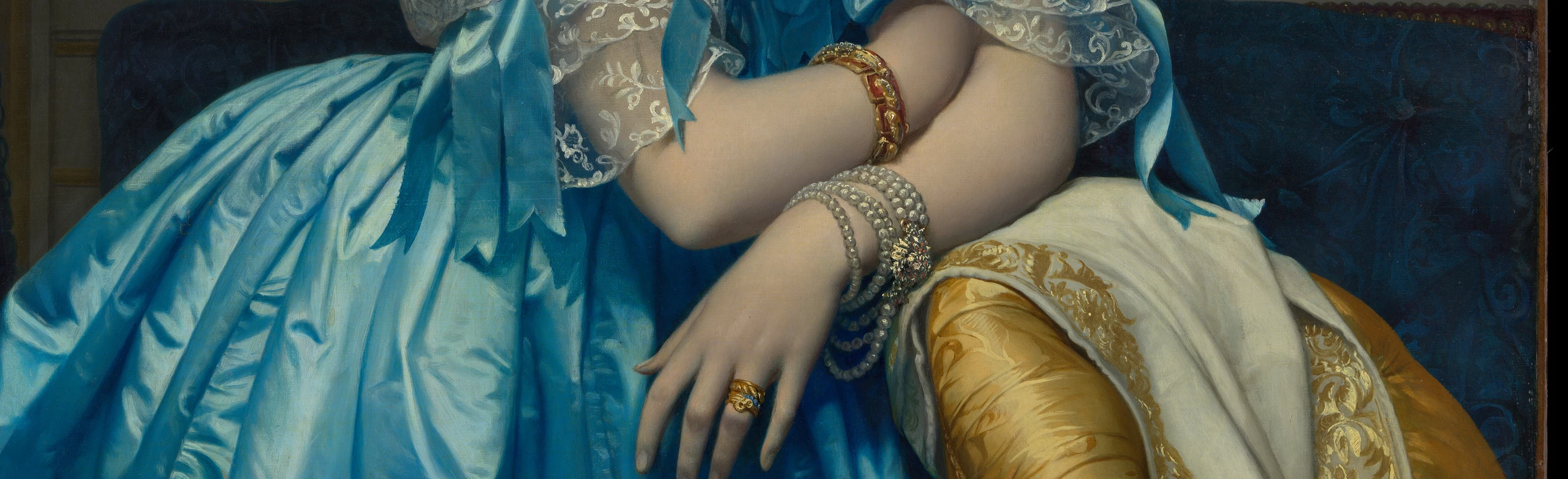
Jean Auguste Dominique Ingres, Princesse de Broglie, 1851–53. The Metropolitan Museum of Art, Robert Lehman Collection, 1975. Public Domain / CC0. Selected detail crop; resized and WebP-compressed. Image source Public Domain / CC0
Jean Auguste Dominique Ingres, Princesse de Broglie, 1851–53. The Metropolitan Museum of Art, Robert Lehman Collection, 1975. Public Domain / CC0. Selected detail crop; resized and WebP-compressed. Image source Public Domain / CC0
Jean Auguste Dominique Ingres, Princesse de Broglie, 1851–53. The Metropolitan Museum of Art, Robert Lehman Collection, 1975. Public Domain / CC0. Selected detail crop; resized and WebP-compressed. Image source Public Domain / CC0
A Painter’s Eye for Everyday Pearls
A bare patch beside an ear, a rolled navy cuff, a necklace against a white tank: four portraits and some very current outfits make the small decisions easier to see.
Give an earring room beside the face, leave a bracelet below a turned-back cuff, and check where a long strand ends on the clothes. Pale pearls can sit beautifully with pale fabrics. A visible neckline and the overall silhouette matter more than copying a complete historical outfit.
The light beside a face
In Vermeer’s Study of a Young Woman, the head turns towards us and a pale ornament catches the light just below the ear. The blue wrap falls away from it; there is room around that small bright shape. The Met dates the painting to about 1665–67 and describes the adornment as costume jewellery. It also considers the picture most likely a tronie, a study of a character rather than a commissioned portrait. That makes it a particularly useful place to start looking: the face, cloth and ornament are doing the work of making an image. Follow their edges. The earring reads clearly because its outline has so little to compete with. The Met’s object record
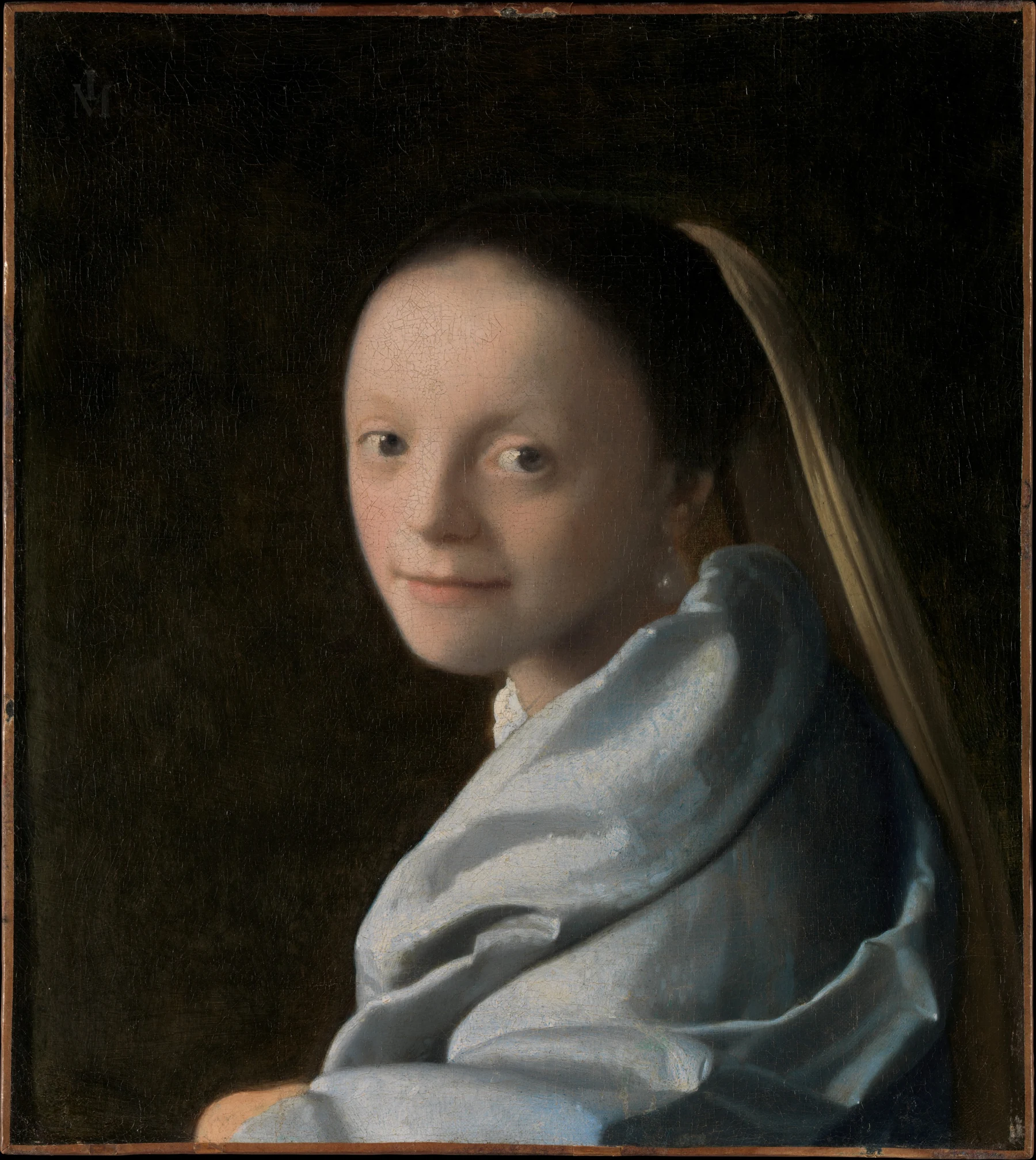
The Metropolitan Museum of Art, Gift of Mr. and Mrs. Charles Wrightsman, in memory of Theodore Rousseau Jr., 1979. Public Domain / CC0. Museum source Public Domain / CC0

Foreign and Commonwealth Office, “G8 Declaration on Preventing Sexual Violence in Conflict,” 11 April 2013; existing crop by Damian Vo, via Wikimedia Commons, CC BY 2.0. WebP conversion only. Image source CC BY 2.0

Angelina Jolie’s 2013 G8 photograph offers a recognisable version of that space. Her hair is gathered low, the ear is clear, and a small round stud sits above the dark neckline. She also wears a short pearl necklace, identified in the contemporary Glamour report. For an open shirt and pearl drops, try moving the hair first: tuck one side back and see where the earring ends in relation to the collar. A point of the collar touching the drop can make both shapes harder to read. With a high neckline, a small stud above the cloth may be the easier choice. Check the angle you actually wear your head at, rather than holding a special pose for the mirror.
Let the sleeve have its turn
Ingres’s Princesse de Broglie is dressed for a much grander room. In the 1851–53 portrait, blue satin, white lace and gold-coloured ornament make the upper body wonderfully busy. Then the eye reaches the hand resting above the chair: pale beads gather around the wrist. The necklace at her chest is a pendant, while the pearls occupy a different part of the composition. The Met identifies pearl, enamel and gold among the jewellery materials. Look at the distance between neck and wrist rather than treating the entire outfit as a matching set. There is a useful rhythm in it—detail near the face, a broad area of blue, then another small cluster of light where the sleeve ends. The Met’s object record
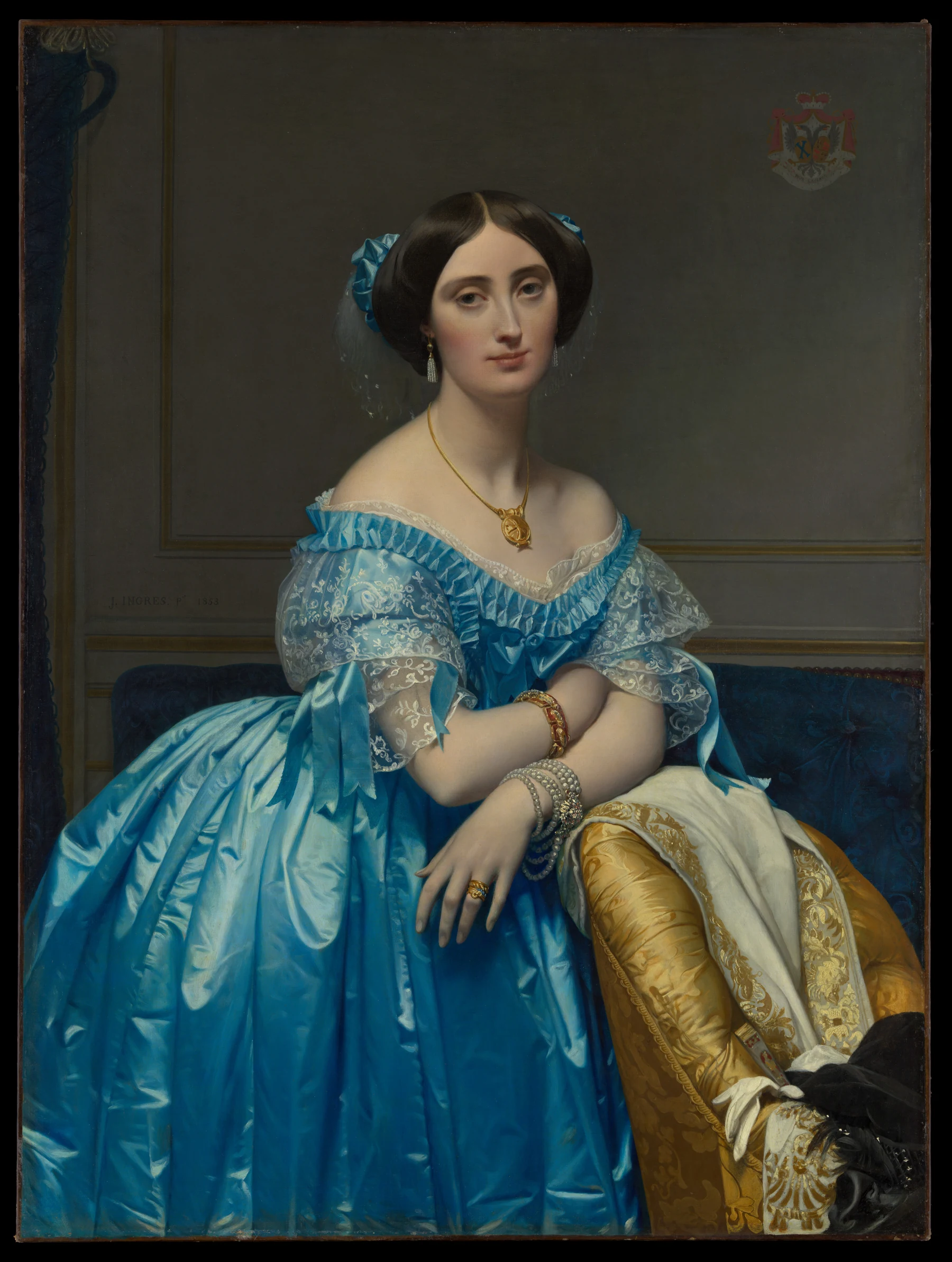
The Metropolitan Museum of Art, Robert Lehman Collection, 1975. Public Domain / CC0. Museum source Public Domain / CC0

AI illustration; fictional model, not a product photograph.
Built-in image_gen styling illustration.
The navy-shirt illustration makes the same distribution practical. The sleeve is turned back far enough to leave a strip of bare forearm; the bracelet sits below it instead of slipping underneath. With cream trousers and small plain earrings, the neck can stay quiet. A blouse with a bow, a particularly good collar, or a textured front already has something to show there. Let it. Before leaving, bend your elbow, reach for a bag and bring the wrist towards a keyboard. If the cuff keeps swallowing the bracelet, roll it once more or choose a different sleeve. For dinner, the same bracelet can sit beside a softer or more textured blouse. The small piece of jewellery stays familiar while the cloth changes the mood.
Where a long strand comes to rest
In the National Gallery of Art’s 1851 Madame Moitessier, the strand moves from exposed skin onto a dark dress, where its pale beads become easy to follow. Her raised hand lifts the lower part of the necklace. That gesture gives the line its particular curve; the museum’s description draws attention to the hand holding the pearls. Imagine lowering the hand, and the arrangement would change. It is a lovely reminder to look at a necklace while it is being worn, rather than deciding everything from a length label. The point where the loop ends can land on plain cloth, meet a button or interrupt a belt. Each produces a different little encounter in the middle of an outfit. National Gallery of Art
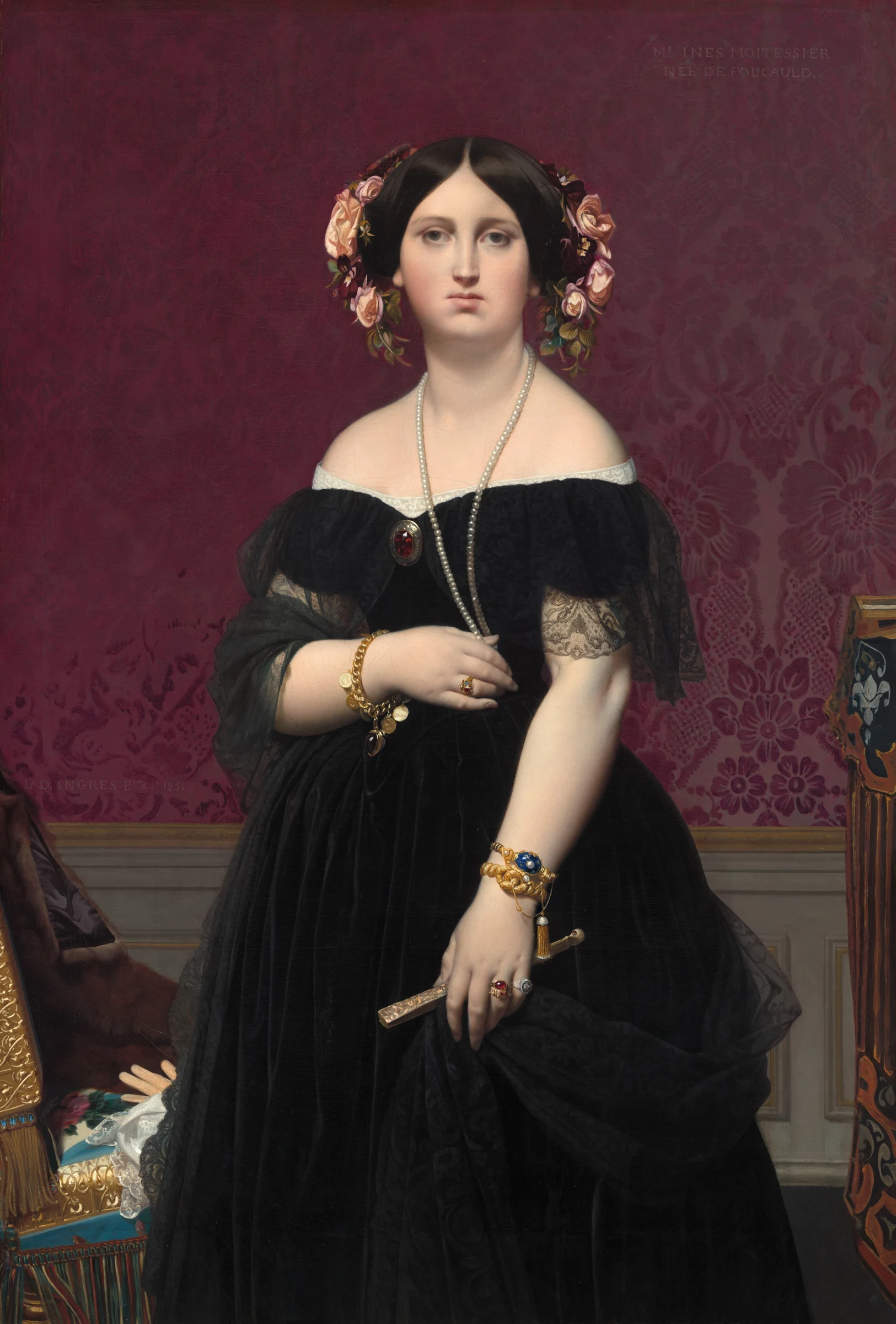
Courtesy National Gallery of Art, Washington. Samuel H. Kress Collection. CC0. Museum source Public Domain / CC0
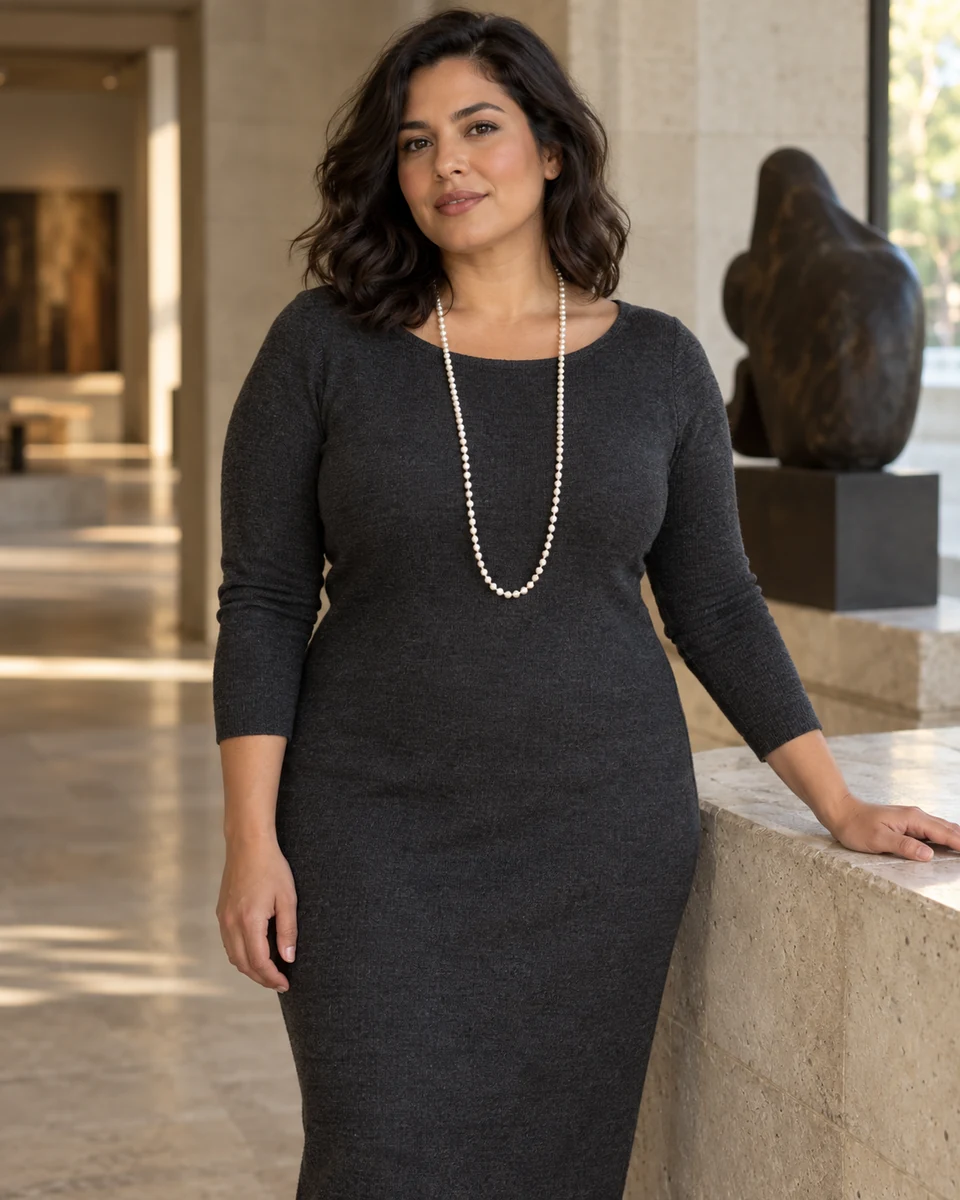
AI illustration; fictional model, not a product photograph.
Built-in image_gen styling illustration.
In the charcoal-knit illustration, the whole loop hangs freely and its bottom rests on uninterrupted fabric. There is enough dress visible below it to read the shape as one continuous line. Try that check with a plain sweater or knit dress you already own. Stand back far enough to see your waist, then sit down; the lowest beads may find a different resting place. If they keep meeting a button or a belt buckle, change the garment before assuming you need a new necklace. A lighter knit will give a softer contrast than charcoal. Either way, leave the loop visible instead of hiding its lower half beneath a jacket fastening. Its ending is part of the outfit.
White, with a little mischief
Sargent’s Mrs. Henry White of 1883 gives white pearls a pale setting. A short strand sits above the open neckline; below it, the dress passes through lace, tulle and broad satin highlights. The National Gallery of Art also identifies pearl earrings and pearls in the brooch. This is an elaborate formal outfit, yet its colours stay close together. The small repeated beads and the larger folds of cloth do different jobs within that pale palette. You can see the necklace against the skin before the eye reaches the dress. A dark background would make a stronger outline, but it would also change the atmosphere of the picture. Here, the pleasure is in the variations of light. National Gallery of Art
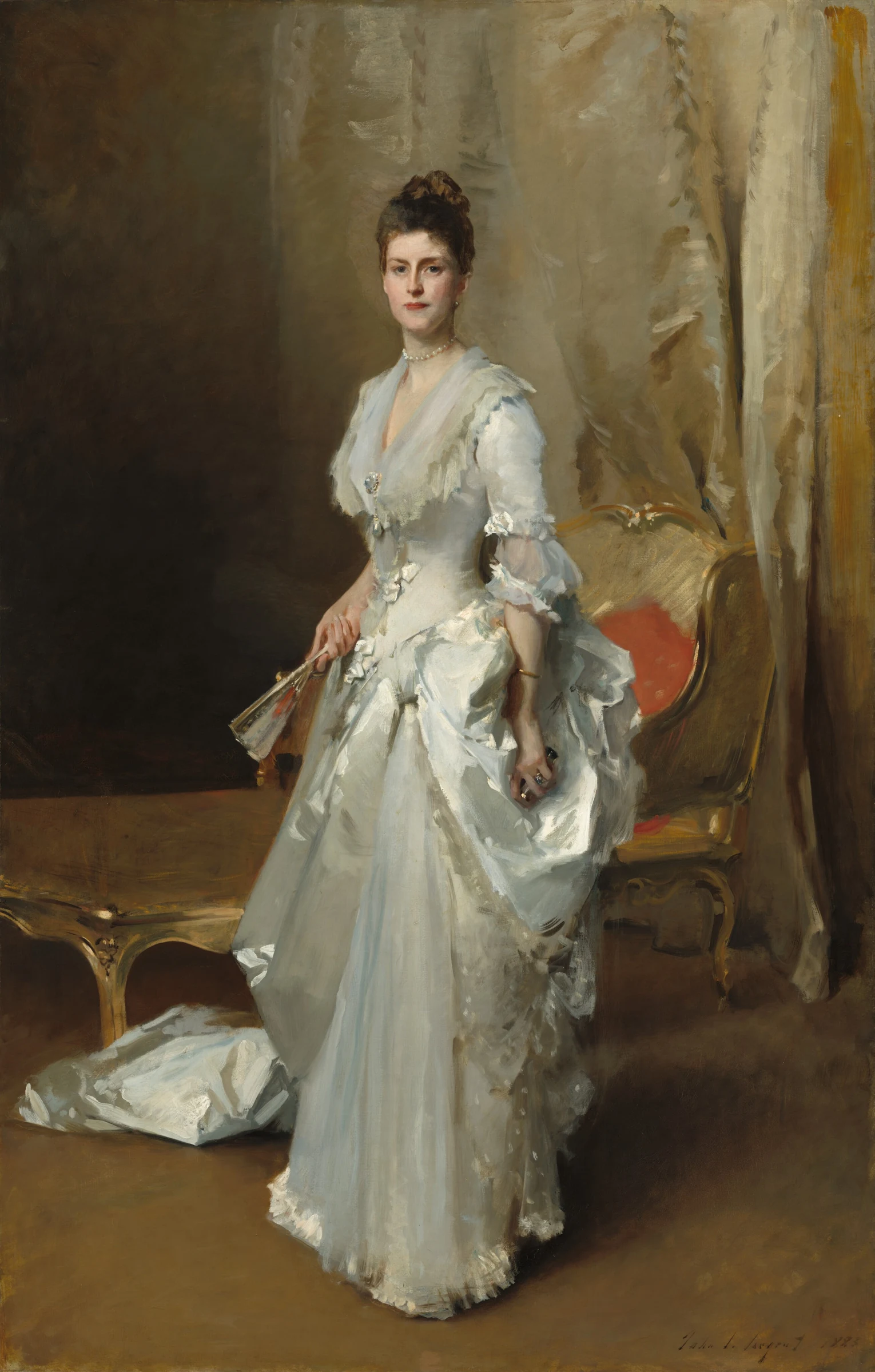
Courtesy National Gallery of Art, Washington. Corcoran Collection (Gift of John Campbell White, 1949). CC0. Museum source Public Domain / CC0
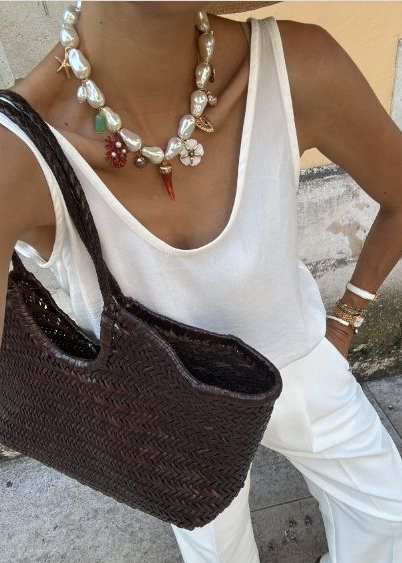
Instagram screenshot; styling reference, not a product photograph.
Lily / @lilylovesfashion; photographer unverified. Image source
Lily’s white tank and trousers take the pale palette somewhere much less ceremonious. Her short necklace has irregular pearl shapes and colourful charms; a dark woven tote gives the outfit another texture. The original Instagram caption calls the look “White & Pearls”. The scoop neckline leaves the necklace on skin, with room for the hanging details. An ivory shirt and a plain short strand would be a quieter version of the idea. With charms like these, keep an eye on whether the lowest one sits freely or catches the edge of the top. White clothes do not have to lead to a matching pearl set: a textured bag, easy trousers and a single playful necklace already give this outfit plenty to look at.
A grey sweater, two different days
Sylvie Mus places a short strand above a grey V-neck knit and lets loose black trousers carry the outfit down to pointed slingbacks. The necklace is a small, clear shape near the face; there is no need for it to compete with the whole silhouette. Her original post identifies this as a Jenni Kayne advertisement. As a styling reference, it offers a useful balance: a soft, open neckline, a compact necklace and a long, relaxed trouser line. Try the neckline of your sweater both as it naturally falls and with the shoulders settled back into place. If the pearls slip under the edge, another neckline may show them more comfortably than repeatedly pulling the necklace forward.
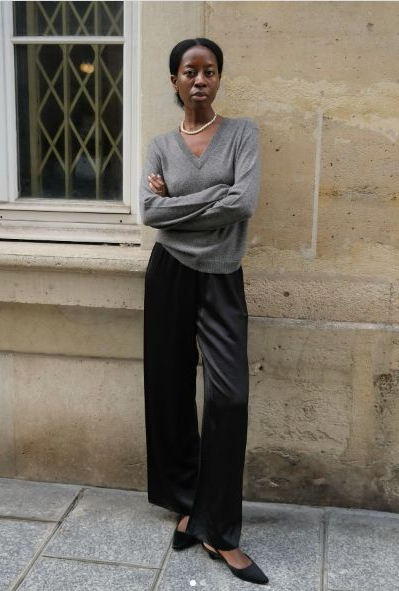
Instagram screenshot; styling reference, not a product photograph.
Sylvie Mus / @sylviemus_; photo: Sylvie Mus. Image source

Instagram screenshot; styling reference, not a product photograph.
@seoheechoe; photographer unverified. Image source
In @seoheechoe’s outfit, a blue shirt sits beneath a grey V-neck vest, and the short pale strand appears in the opening between the collar points. Black shorts and sunglasses change the mood again. There are more layers here than in Sylvie’s look, but the little area around the necklace remains legible. This is an easy experiment with clothes already on a hanger: open the shirt slightly, settle the vest, then check whether the collar frames the necklace or covers it. Keep the view wide enough to include the rest of the outfit. The paintings have trained us to notice a sleeve, a neckline and where a strand ends; the clothes in front of the mirror supply the next composition.
Questions you might ask
Sources
- The Met: Vermeer, Study of a Young Woman
- The Met: Ingres, Princesse de Broglie
- National Gallery of Art: Ingres, Madame Moitessier
- National Gallery of Art: Sargent, Mrs. Henry White
- Glamour, Jolie at G8,12 April 2013: necklace identification
- Lily / @lilylovesfashion, original post, 30 July 2024
- Sylvie Mus, original advertising post, 30 October 2024
- @seoheechoe, original post, 4 October 2020
Card image credits
- Featured card: Jean Auguste Dominique Ingres, Princesse de Broglie, 1851–53. The Metropolitan Museum of Art, Robert Lehman Collection, 1975. Public Domain / CC0. Selected detail crop; resized and WebP-compressed. Image source Public Domain / CC0
- Article card: Jean Auguste Dominique Ingres, Princesse de Broglie, 1851–53. The Metropolitan Museum of Art, Robert Lehman Collection, 1975. Public Domain / CC0. Selected detail crop; resized and WebP-compressed. Image source Public Domain / CC0
Hazelnut Select Studio is a Vancouver studio specialising in saltwater cultured pearls — Akoya, South Sea Gold and White, Black Tahitian and Keshi. Pearls are selected and matched in Japan; pieces with a certificate carry one issued by Pearl Science Laboratory, Tokyo. Viewings are in Vancouver, in person and by appointment.