National Palace Museum, Taipei. CC BY 4.0 @ www.npm.gov.tw. Resized. Image source CC BY 4.0
National Palace Museum, Taipei. CC BY 4.0 @ www.npm.gov.tw. Resized. Image source CC BY 4.0
National Palace Museum, Taipei. CC BY 4.0 @ www.npm.gov.tw. Resized. Image source CC BY 4.0
Water or Metal? The Stories People Give a Pearl
A saved wedding veil, two ways to explain a pearl, and a small imperial label: following the people behind the meanings.
Contemporary Chinese-language fengshui writing gives pearls different associations. One lifestyle feature uses watery origin for water and appearance or lustre for metal; a practitioner's advice instead begins with a category assigned to the wearer. These are attributable interpretations, not a single universal pearl rule. The photographed outfits illustrate appearance, without assigning beliefs to their wearers.
A wrist, a necklace, two ways of looking
The lace around Marina's wrist has a past. In her account of making this photograph, it is her wedding veil, brought out again beside pale bead bracelets, gold-coloured ornaments and a rose. A familiar piece of fabric has acquired another use, and the arrangement is warmer for knowing it. The next photograph, posted by @lettertodecembre, takes pale beads and metallic accents to the neckline: linked strands cross bare skin above a white off-shoulder top, with larger interlocking motifs among the smaller forms. These two pictures offer a tangible starting point for an unexpectedly slippery question in contemporary Chinese-language fengshui writing. When a pearl is given a five-phase association, which feature earns it that label? Its origin in water, the light on its surface, or a story attached to the person wearing it? The photographs show texture and placement; the explanations come from particular writers.
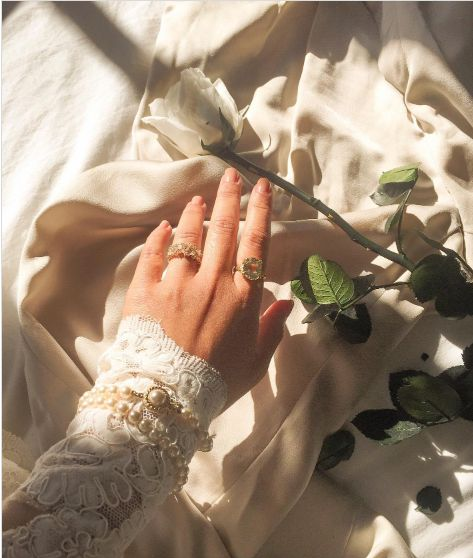
Instagram screenshot for editorial styling reference; not a Hazelnut product photograph or endorsement.
Source: Marina / @roosavintage, Instagram. Photographer unverified. Original-post screenshot. Image source
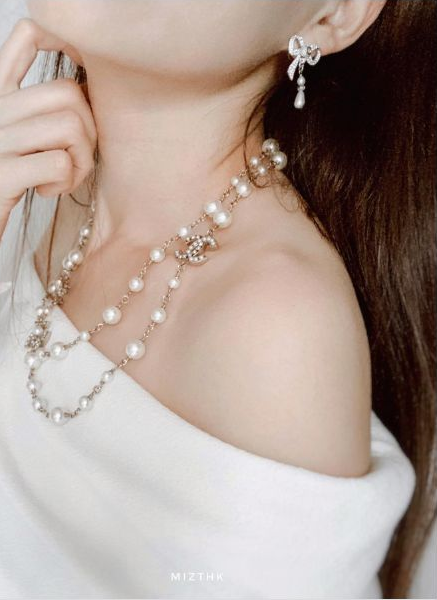
Instagram screenshot for styling reference; not a Hazelnut product photograph or endorsement.
Source: @lettertodecembre, Instagram; image watermark MIZTHK. Photographer unverified. Original-post screenshot; no Hazelnut endorsement. Image source
Hai Taeng's July 2025 GirlStyle Malaysia feature gives the pearl two routes into the five phases: water through watery origin, and metal through fine appearance and lustre. The difference becomes easier to follow beside the images. Marina's rounded wrist beads and the second image's beads-and-links invite attention to small shapes and reflected light. A writer interested in origin would begin somewhere else entirely, before the necklace or bracelet existed. The object has stayed the same; the feature selected to explain it has changed. This is why copying only the final entry in an elemental chart can leave a reader puzzled. “Water” and “metal” have arrived by different routes. Keeping the author's reason beside the label preserves the interesting part of the account.
Advice begins with a person—or a place to wear jewellery
鄺子傑's 2020 852.House column begins with a person he describes as lacking water, then recommends pearls and obsidian; the page identifies the advice as his personal opinion. The pairing is a small surprise. Pearls and obsidian need not resemble one another to share a place in this recommendation. Their connection comes from the interpretation of the wearer. Beside that account, Jennie's photographed outfit gives us something simpler to see: a short pale strand at the base of the neck, an open white collar and a navy jacket around it. The white shirt is the larger pale area, while the beads make a much smaller line against skin. The open collar leaves a little skin between the necklace and the shirt, giving that fine line an outline of its own. It takes up very little room beside the broad lapels, yet remains easy to pick out.

Instagram screenshot for editorial styling reference; not a Hazelnut product photograph or endorsement.
Source: Jennie / @jennierubyjane, Instagram. Photographer unverified. Original-post screenshot. Image source
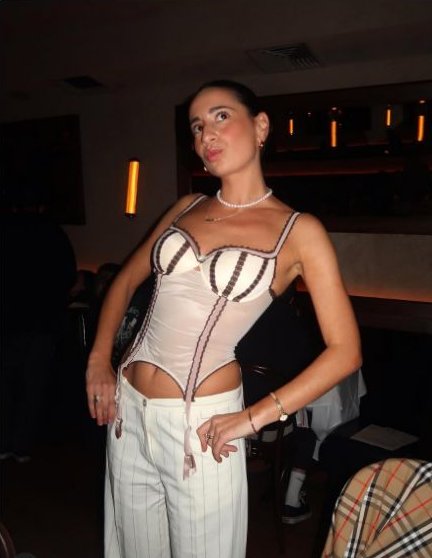
Instagram screenshot for styling reference; not a Hazelnut product photograph or endorsement.
Source: Sophie Cohen / @stylewithsoco, Instagram. Photographer unverified. Original-post screenshot; no Hazelnut endorsement. Image source
In Sophie's indoor photograph, a short pale strand sits above a fine chain and a light, structured top edged in dark trim. Pale striped trousers continue below it. The exposed neckline gives the small necklace a clear setting; it produces a different effect from Jennie's shirt and jacket. Wearing position also matters in Catherine's December 2024 Malaysia International Jewellery Fair blog, where colour-based five-phase groupings appear alongside body placement and references to chakras, before an invitation to the fair. Several symbolic vocabularies have been gathered into an accessories story that can travel with the reader. That portability is part of its appeal. A bracelet or necklace can be kept close, given to someone, or associated with a particular occasion. A wish accompanying a gift—“a reminder of a good beginning,” for example—leaves room for affection and memory. A promise to change the recipient's circumstances asks the object to do something much larger.
The little label beside the court beads
National Palace Museum, Taipei. CC BY 4.0 @ www.npm.gov.tw. Resized. Museum source CC BY 4.0
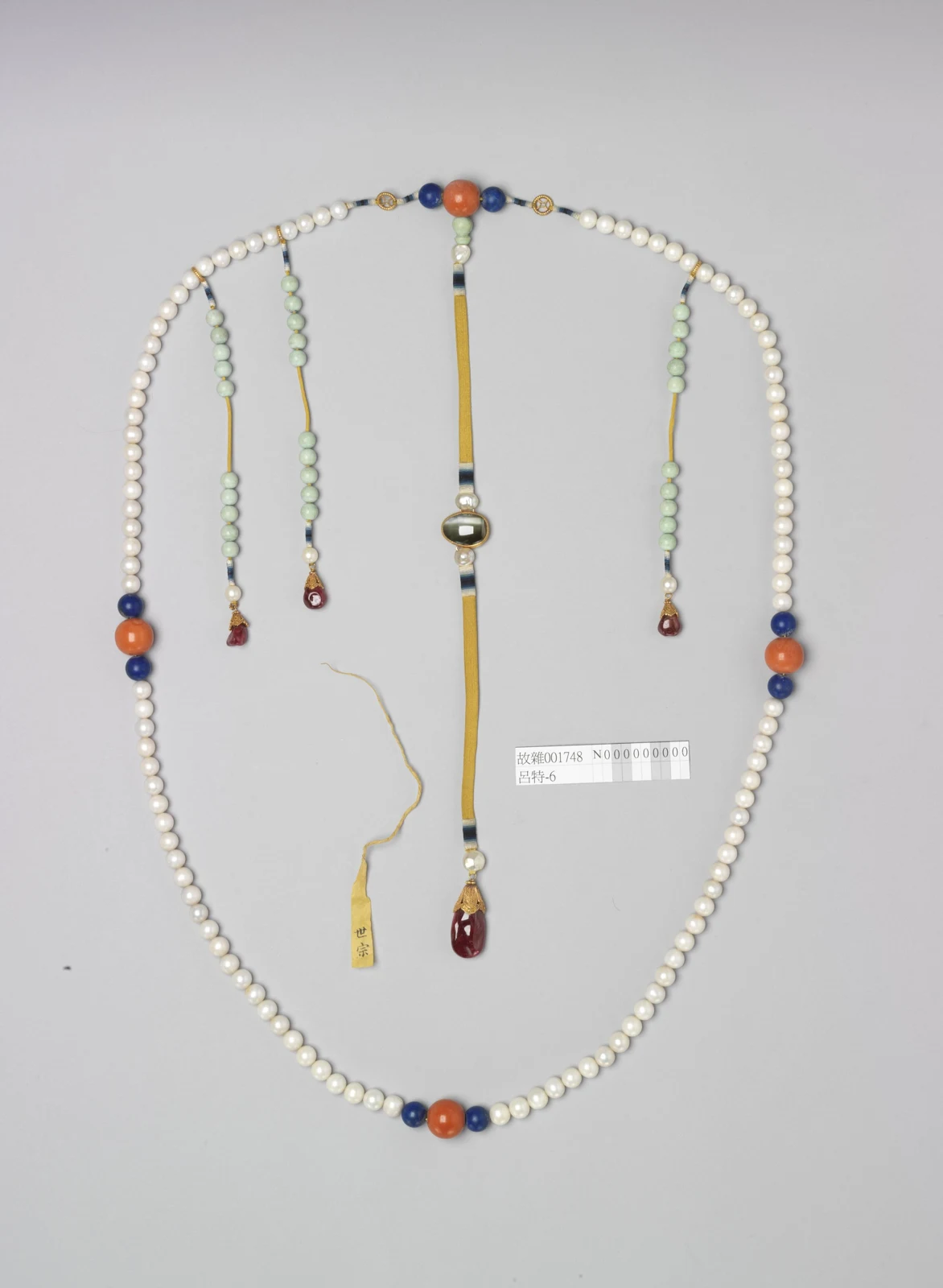
The National Palace Museum's Yongzheng-period dongzhu court beads carry a more specific historical association. The long loop and hanging ornaments reward a close look: repeated pale beads lead towards coloured components, while slender connecting lines keep the smaller pendants apart. The little yellow label is less spectacular than the necklace, yet it changes the story. The catalogue identifies its reference to Shizong, the Yongzheng emperor, and connects the northeastern Chinese pearls with the Manchu ancestral homeland and difficult harvesting. That information gives a particular object a particular connection. The whole view lets the eye follow the necklace's arrangement, with the small label beside the suspended coloured ornament. Neither colour nor outline alone would provide the catalogue's account. The surviving object and its record work together, much as the bracelets and Marina's explanation of her saved veil give us different kinds of information.
The older history of fengshui is larger than a modern accessories chart: Ole Bruun's public chapter summary places it within Chinese divination and cosmology. The small court label is a useful reminder of how much specificity can matter within that broad cultural landscape. A museum records an imperial association. A practitioner begins with an interpretation of a person. A lifestyle writer chooses origin or lustre; a fair's blog makes jewellery the bearer of several symbolic vocabularies. These sources document beliefs and interpretations, not established changes in health or luck. Keeping their speakers in view leaves the stories more vivid. Before asking a pearl for one permanent label, ask who supplied the explanation and what caught their attention. It might have been the water in its origin, a line of light at the neck, or a piece of fabric somebody had kept for years.
Questions about pearls and five-phase meanings
Sources
- 鄺子傑 / 852.House, 〖配戴飾物小貼士〗, 1 September 2020.
- Hai Taeng / GirlStyle Malaysia, 〖珍珠〗戴上秒变气质小仙女!解锁6大功效、寓意、禁忌、真假辨识、保养与开运搭配!, 16 July 2025; cited as an example of contemporary interpretation, not for its efficacy claims.
- Catherine / Malaysia International Jewellery Fair, 珠宝的风水, 4 December 2024; commercial blog.
- Ole Bruun / Cambridge University Press, “A brief history of feng shui,” An Introduction to Feng Shui, public chapter summary.
- National Palace Museum, Court beads of dongzhu freshwater pearls / 東珠朝珠, Yongzheng period.
- Marina / @roosavintage, wrist still life and wedding-veil account, 13 October 2019.
- @lettertodecembre, layered pearl-and-chain styling, 9 September 2020; original image watermark MIZTHK.
- Jennie / @jennierubyjane, open-collar styling, 25 May 2020.
- Sophie Cohen / @stylewithsoco, indoor evening outfit, 21 October 2023.
Card image credits
- Featured card: National Palace Museum, Taipei. CC BY 4.0 @ www.npm.gov.tw. Resized. Image source CC BY 4.0
- Article card: National Palace Museum, Taipei. CC BY 4.0 @ www.npm.gov.tw. Cropped card detail. Image source CC BY 4.0
Hazelnut Select Studio is a Vancouver studio specialising in saltwater cultured pearls — Akoya, South Sea Gold and White, Black Tahitian and Keshi. Pearls are selected and matched in Japan; pieces with a certificate carry one issued by Pearl Science Laboratory, Tokyo. Viewings are in Vancouver, in person and by appointment.